



The Future of Bio-Magnetic Separation in Life Sciences
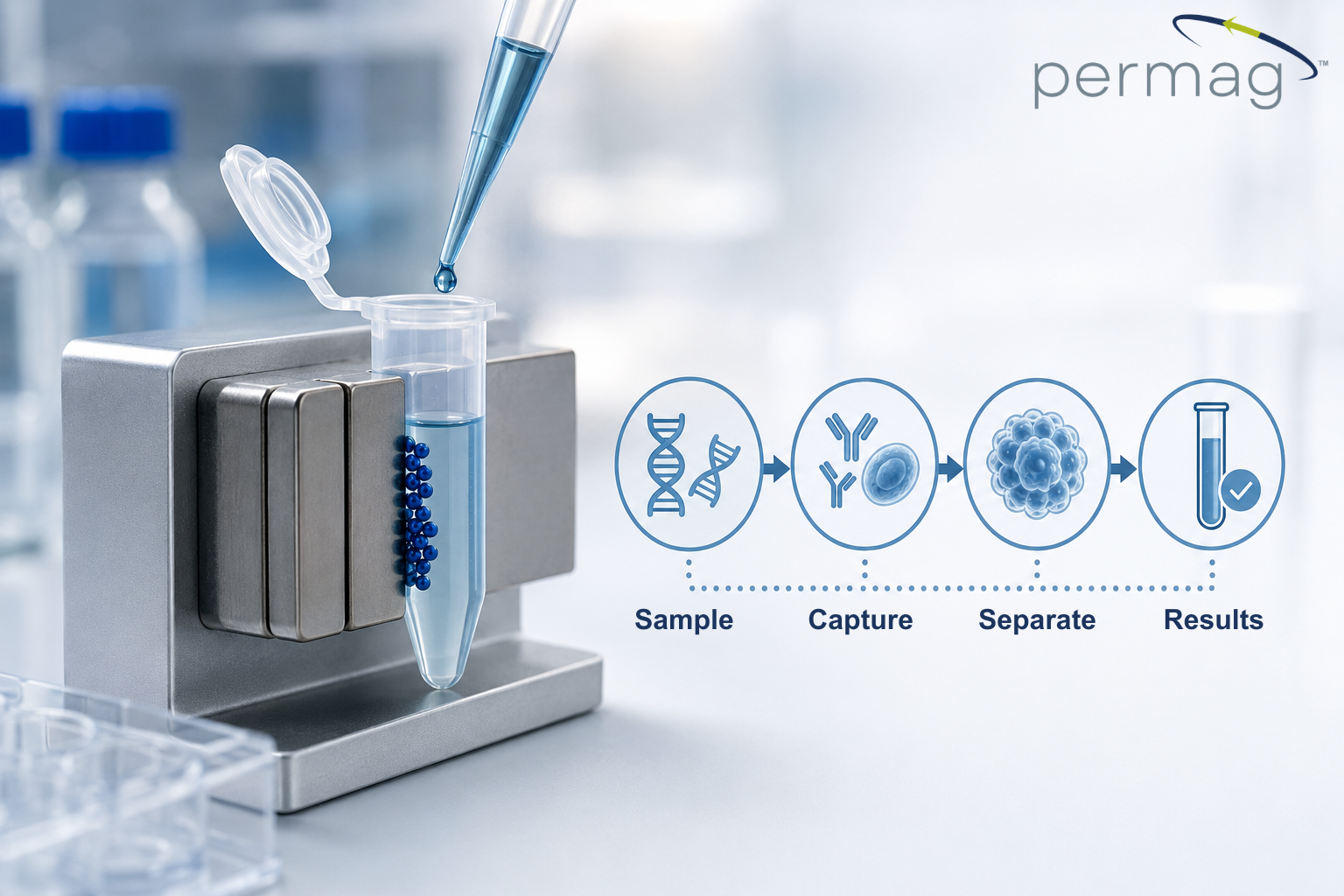
Clinical diagnostics and pharmaceutical development continue to demand faster results, greater accuracy, and higher throughput. From molecular testing and genomics to advanced drug discovery workflows, laboratories are under constant pressure to process larger sample volumes while maintaining precision and reliability. As these demands grow, magnetic solutions for clinical diagnosis are playing an increasingly important role in improving workflow efficiency, accuracy, and automation.
Bio-magnetic separation has emerged as a critical technology helping life science organizations meet these demands. By using magnetic fields to isolate targeted biological materials, modern magnetic separation systems improve efficiency, support automation, and help accelerate diagnostic and therapeutic innovation.
What Is Bio-Magnetic Separation?
 Bio-magnetic separation uses magnetic particles or beads to capture specific biomolecules, cells, proteins, or nucleic acids from a sample. Once bound to the target material, magnetic separators generate controlled magnetic fields that isolate the magnetic particles from the surrounding medium.
Compared to traditional methods such as centrifugation or filtration, magnetic separation offers several advantages:
- Faster processing times
- Reduced sample handling
- Improved reproducibility
- Lower risk of contamination
- Easier integration with automated systems
These benefits make magnetic separation especially valuable in high-throughput diagnostic and pharmaceutical environments.
From Research Labs to Clinical Diagnostics
Magnetic separation technology initially gained traction in research laboratories and molecular biology applications. Early systems often relied on manual workflows and lower-throughput processing methods.
Advances in magnetic materials, engineering design, and automation have significantly expanded the technology’s capabilities. Today, precision-engineered magnetic assemblies support a wide range of applications across clinical diagnostics and life sciences, including:
- Genomics and sequencing workflows
- Cell and gene therapy development
- In vitro diagnostic systems
- Drug discovery and pharmaceutical research
- Biomarker isolation and analysis
As healthcare continues shifting toward precision medicine and personalized therapies, the need for highly reliable sample preparation technologies continues to grow.
Improving Speed and Reliability
One of the most important advantages of bio-magnetic separation is speed. Rapid isolation and purification steps reduce processing time and improve laboratory throughput. In clinical settings where turnaround time matters, faster workflows can help accelerate diagnosis and treatment decisions.
Magnetic separation also improves consistency and reliability. Precisely engineered magnetic fields help ensure uniform particle capture and repeatable performance across large sample volumes. This level of control is especially important in diagnostic applications where accuracy directly impacts patient outcomes.
Automation compatibility is another major advantage. Modern diagnostic platforms increasingly rely on robotic systems and automated liquid handling equipment. Magnetic separation technologies integrate well into these workflows, reducing manual intervention and minimizing opportunities for human error.
Engineering Challenges Behind the Technology
Despite its advantages, bio-magnetic separation requires careful engineering to achieve optimal performance.
Magnetic field strength, field uniformity, and separator geometry all influence separation efficiency. Engineers must also account for biocompatibility, corrosion resistance, cleanroom compatibility, and long-term durability.
In pharmaceutical and clinical environments, reliability is critical. Magnetic assemblies must maintain stable performance across demanding operating conditions while supporting highly sensitive biological workflows.
Custom magnetic solutions help address these challenges by tailoring magnetic circuit design, material selection, and assembly configuration to the specific application requirements.
The Future of Bio-Magnetic Separation
The future of bio-magnetic separation is closely tied to broader trends in life sciences and diagnostics.
As laboratories adopt greater levels of automation and AI-driven analysis, demand for fast and repeatable sample preparation technologies will continue to increase. Miniaturized diagnostic devices and point-of-care testing systems are also creating new opportunities for compact magnetic assemblies with highly controlled field performance.
At the same time, advances in cell therapy, molecular diagnostics, and precision medicine will require even greater levels of separation accuracy and throughput.
Magnetic engineering will play an increasingly important role in enabling these next-generation technologies. From optimized separator designs to high-performance magnetic materials, innovation in bio-magnetic systems will continue helping life science organizations deliver faster, more dependable results.
As clinical diagnostics and pharmaceutical development evolve, bio-magnetic separation is positioned to remain a foundational technology supporting the future of healthcare innovation.