



Designing Custom Permanent Magnets

Inside the Art of Designing Custom Permanent Magnets
In high-performance systems, permanent magnets are rarely off-the-shelf components. They are engineered solutions designed to meet exact performance, environmental, and integration requirements. From aerospace actuators to semiconductor equipment and medical devices, custom permanent magnet designs play a critical role in enabling reliability, efficiency, and innovation.
Designing these magnets is both a science and an art. It requires a deep understanding of materials, magnetic behavior, and system-level constraints, combined with iterative optimization and real-world validation.
Defining Requirements: The Foundation of Design
 Every successful magnet design begins with a clear understanding of the application. First, engineers evaluate key parameters such as required magnetic field strength and distribution, operating temperature range, and mechanical constraints like size, weight, and tolerances. Additionally, environmental factors, including corrosion exposure, vacuum conditions, and vibration, also play a significant role.
Equally important is how the magnet interacts with surrounding components such as sensors, coils, or shielding. Early collaboration between engineering teams ensures engineers fully understand these variables before design begins. This approach reduces downstream risk and minimizes rework.
Material Selection and Magnetic Circuit Design
Material selection is one of the most critical decisions in the design process. Neodymium Iron Boron (NdFeB) offers high energy density, making it ideal for compact, high-force applications. Samarium Cobalt (SmCo) provides exceptional thermal stability and corrosion resistance, making it well suited for harsh environments.
Beyond material choice, engineers design the magnetic circuit, which defines the path that magnetic flux follows through the system. This includes optimizing air gaps, return paths, and flux concentration to improve efficiency. Tradeoffs are constant. Engineers must balance strength and temperature stability, size and field uniformity, and cost and performance. The goal is to achieve optimal performance within real-world constraints.
Modeling and Simulation: Designing Before Building
Advanced modeling tools, including finite element analysis (FEA), allow engineers to simulate magnetic performance before physical prototypes are built. These simulations predict flux density, field distribution, and potential demagnetization risks under different operating conditions.
Modeling helps identify issues early, such as leakage fields or localized saturation. This reduces the number of physical iterations required and accelerates development timelines. While simulation is a powerful tool, it supports the design process rather than replacing real-world validation.
Prototyping: Turning Models into Reality
Once a design is validated digitally, it moves into prototyping. Rapid prototyping enables engineers to assess form, fit, and function in a physical environment. Even small adjustments in geometry, magnetization direction, or alignment can significantly impact performance.
At this stage, manufacturing considerations become critical. Engineers refine assembly methods, determine coating requirements for corrosion protection, and ensure that tolerances can be consistently achieved.
Testing and Validation: Proving Performance
Testing is where design assumptions are confirmed. Engineers conduct field mapping to verify magnetic strength and distribution, along with thermal and environmental testing to ensure stability under operating conditions. Mechanical testing, including vibration and stress analysis, further validates durability.
For mission-critical applications, repeatability is essential. That being said, each unit must consistently meet performance specifications, making validation a key step before full-scale production.
From Prototype to Production
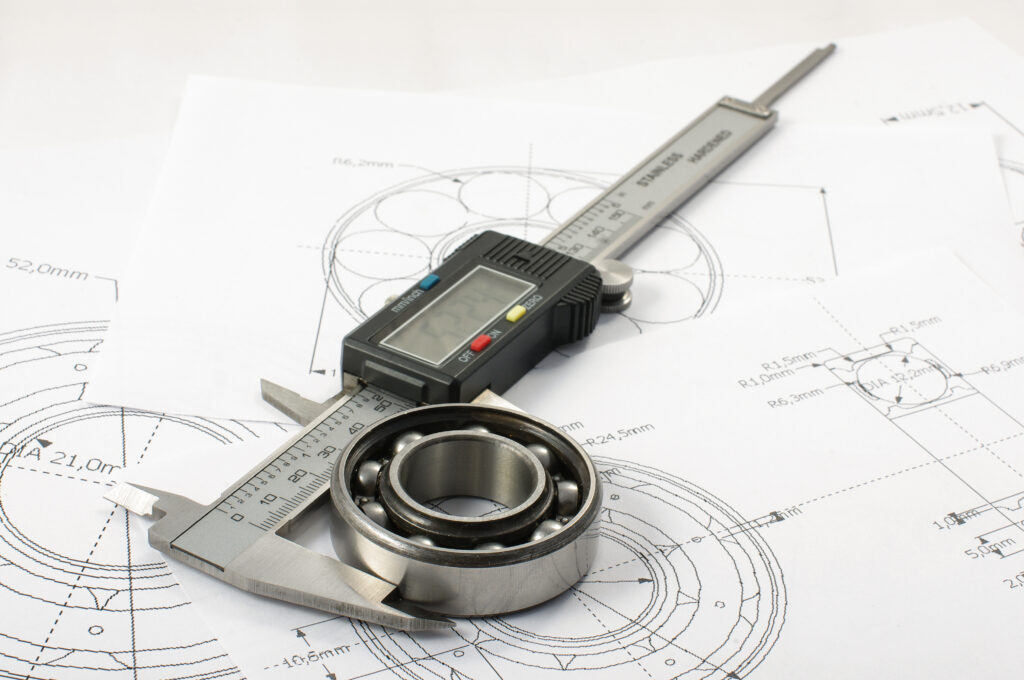
Scaling from prototype to production requires tight process control and robust quality assurance. Material sourcing, manufacturing consistency, and inspection processes all play a role in maintaining performance across production volumes.
Designs are often refined further at this stage to improve manufacturability and cost efficiency without compromising performance. The result is a solution that performs reliably across the full lifecycle of the application.
Engineering Magnetics for Real-World Performance
Custom permanent magnet design is a comprehensive process that integrates materials science, simulation, prototyping, and rigorous validation. When executed effectively, it enables technologies to perform with precision and reliability in demanding environments.
From aerospace and defense systems to medical devices and semiconductor equipment, engineered magnetics continue to power innovation, one application at a time.