



Magnetic Couplings for Sealless, Fail-Safe Operation
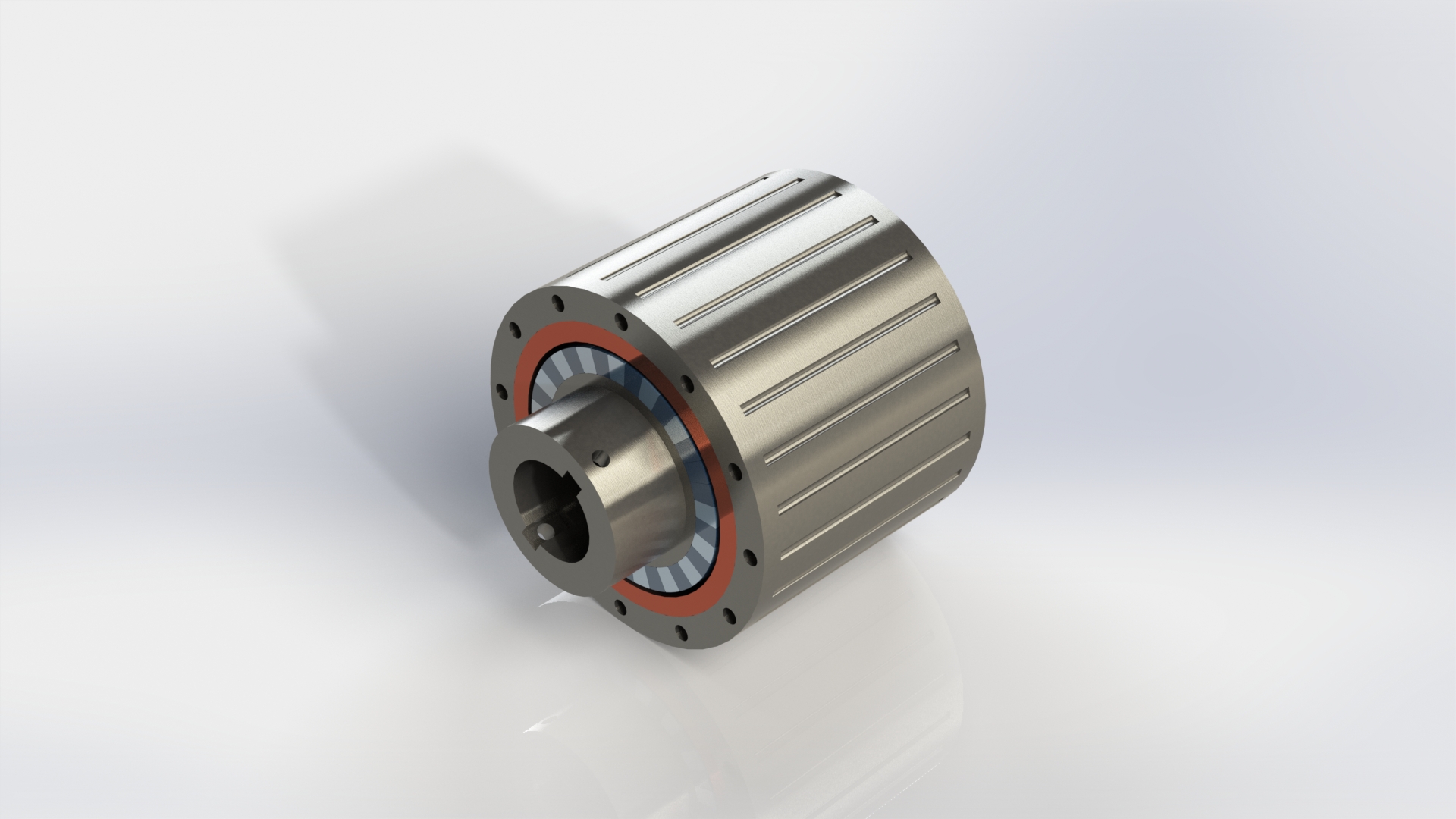
The Quiet Power Behind Defense: Magnetic Couplings for Sealless, Fail-Safe Operation
In defense systems, reliability is not a feature, it’s a requirement. From naval propulsion to advanced aircraft or missile cooling system, even a minor leak or mechanical failure can compromise mission success, safety, and operational readiness. That’s why magnetic couplings for defense systems are becoming an increasingly important solution for engineers seeking leak-free, low-maintenance, highly reliable torque transmission.
Traditional couplings rely on physical contact and dynamic seals to transmit torque. Over time, those seals wear down, introducing risk: leakage, contamination, and unplanned maintenance. In high-stakes defense environments, those risks are unacceptable.
Magnetic couplings offer a fundamentally different solution that removes the seal entirely.
A Different Approach to Torque Transmission
Magnetic couplings transmit torque through a magnetic field rather than physical contact. An external drive magnet assembly interacts with an internal driven assembly across a sealed containment barrier. This design enables torque transfer without any direct mechanical connection.
The result is a completely sealed system. Fluids, gases, or sensitive media remain fully contained, while the motor and drive components stay isolated from the process environment. With no contact at the coupling interface, there is no friction-driven wear and no dynamic seals to fail.
Why Sealless Design Matters in Defense
In defense applications, sealing challenges are amplified by extreme conditions including temperature fluctuations, pressure differentials, vibration, and exposure to corrosive or hazardous materials.
Magnetic couplings address these challenges directly.
First, they eliminate leakage. Whether handling fuel, hydraulic fluids, or specialty coolants, a hermetically sealed system prevents escape and contamination. This is critical in confined environments such as submarines, aircraft, and mobile ground systems.
Second, they enhance reliability. Without seals to degrade, systems maintain consistent performance over longer operational lifecycles. This reduces the likelihood of failure during mission-critical operations.
Finally, they reduce maintenance burden. Removing a key wear component minimizes routine servicing and downtime: an important advantage for remote, unmanned, or difficult-to-access systems.
Where Magnetic Couplings Deliver Value
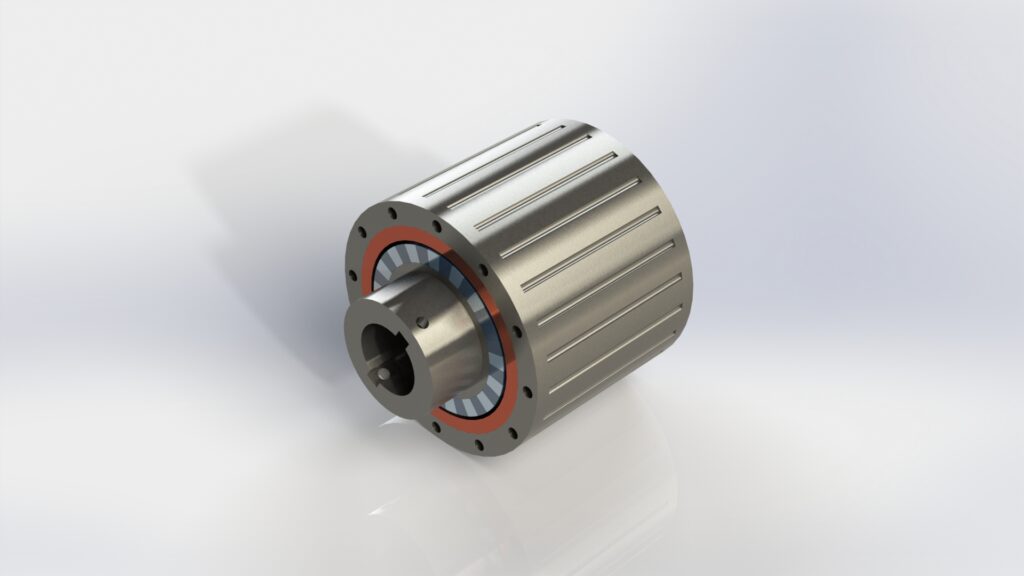 Magnetic couplings are increasingly used across a range of defense platforms and subsystems.
In fluid handling systems, they enable sealless pumps for fuel delivery, hydraulics, and chemical processing. These systems benefit from leak-free operation in hazardous or sensitive environments.
In propulsion and power systems, magnetic couplings support auxiliary components that require reliable torque transfer without introducing additional mechanical complexity or failure points.
Thermal management is another critical area. Cooling systems for radar, EO/IR sensors, and directed energy technologies rely on closed-loop fluid circulation. Magnetic couplings ensure these systems remain sealed, protecting both performance and surrounding equipment.
They are also well-suited for compressors and systems handling volatile or toxic media, where containment is essential for both safety and compliance.
Engineering for Defense Environments
Designing magnetic couplings for defense applications requires careful consideration of operating conditions and performance demands.
Material selection is critical. High-performance magnetic materials such as samarium cobalt and neodymium iron boron are chosen based on temperature stability, corrosion resistance, and required field strength.
Thermal management must also be addressed, particularly in designs where eddy currents can introduce heat. Engineers must balance torque transmission with efficiency and thermal limits.
Mechanical considerations, including alignment, load requirements, and vibration resistance, are equally important. Systems must perform reliably under shock and dynamic conditions.
Finally, the containment barrier itself must be engineered for the environment, whether that involves high pressure, vacuum conditions, or exposure to aggressive media.
Built for Mission Assurance
Magnetic couplings align closely with the priorities of modern defense systems: reliability, safety, and long-term performance.
As platforms evolve toward greater electrification, autonomy, and system integration, the need for leak-free, low-maintenance solutions will only grow. Magnetic couplings provide a proven way to remove failure points while improving overall system integrity.
They may operate quietly in the background, but in defense applications, that quiet reliability is exactly what makes them indispensable.