



How Magnetic Design Optimizes Semiconductor Equipment Performance
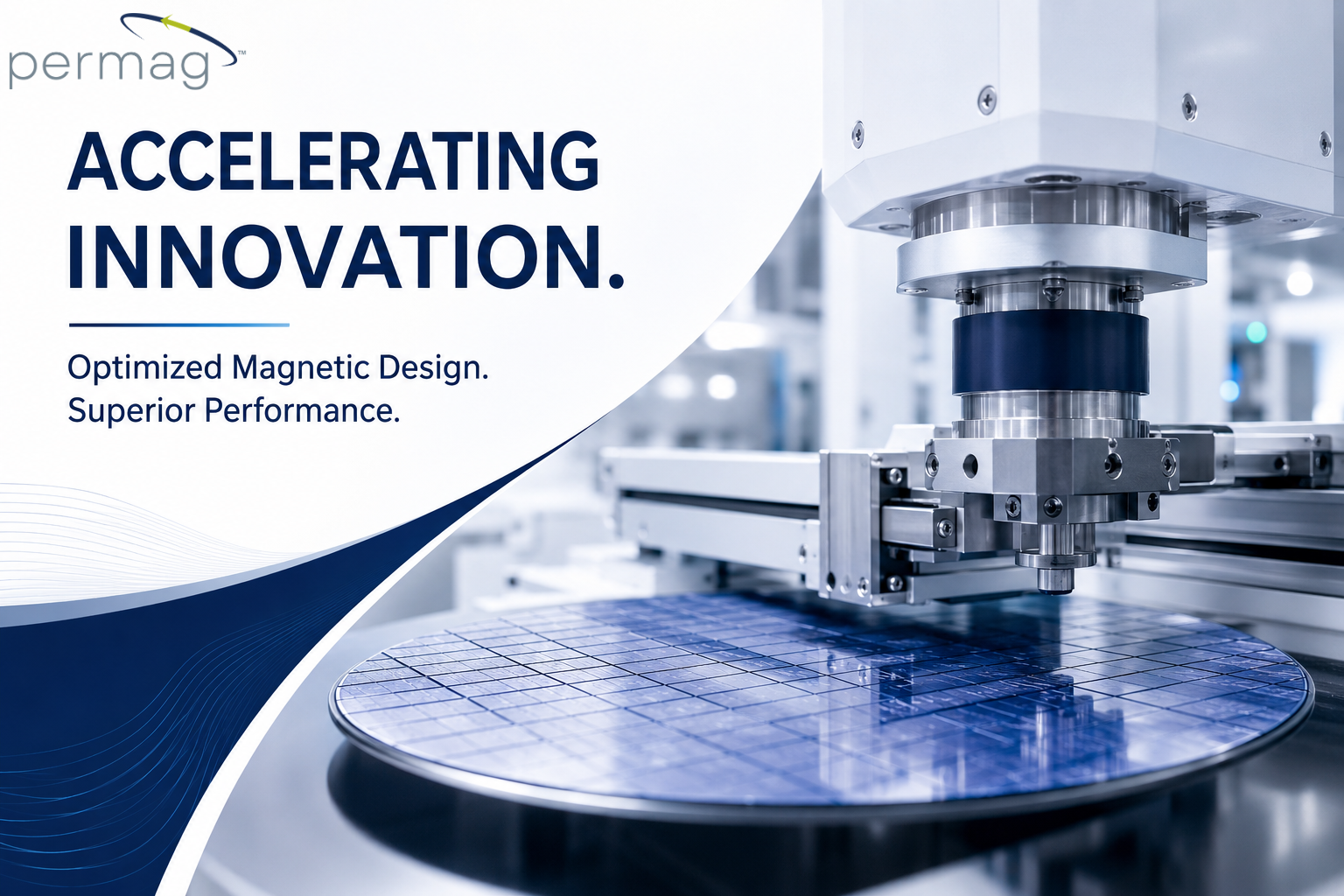
Accelerating Innovation: How Magnetic Design Optimizes Semiconductor Equipment Performance
Semiconductor manufacturing depends on speed, precision, and reliability. As chip architectures become more advanced and tolerances tighten, semiconductor OEMs are under pressure to improve equipment performance while shortening development cycles.
Magnetic assemblies play a critical role in making that possible. From wafer handling systems to lithography tools and deposition equipment, advanced magnetic designs support precise motion, stable operation, and consistent performance in demanding environments.
For semiconductor OEMs, optimizing magnetic systems early in development can improve efficiency, reduce redesigns, and accelerate time to market.
The Role of Magnetics in Semiconductor Equipment
Magnetic technologies support a wide range of semiconductor applications, including:
- Precision linear motion systems
- Wafer positioning and handling
- Vacuum-compatible motors and actuators
- Sputtering and deposition equipment
- Inspection and metrology systems
These applications require exceptional precision and reliability. Magnetic assemblies must maintain stable performance under vacuum conditions, elevated temperatures, continuous duty cycles, and strict cleanroom requirements.
As semiconductor processes become more advanced, even small inefficiencies in magnetic design can impact positioning accuracy, thermal stability, and overall throughput.
Accelerating Development with Simulation
 Traditional development cycles often involve repeated physical testing and redesign. Advanced simulation tools help reduce these delays by allowing engineers to evaluate magnetic performance before manufacturing begins.
Using finite element analysis and magnetic circuit modeling, engineers can:
- Optimize force and motion performance
- Reduce stray magnetic fields
- Evaluate thermal behavior
- Compare material configurations
- Identify design challenges early
This approach helps semiconductor OEMs make faster, more informed design decisions while minimizing costly iteration later in development.
At Permag, collaborative engineering and early-stage modeling help customers refine magnetic assemblies for application-specific performance requirements.
Rapid Prototyping Improves Efficiency
Rapid prototyping helps semiconductor OEMs validate concepts faster and reduce engineering risk.
Quick-turn prototypes allow teams to:
- Verify system integration
- Evaluate motion and force characteristics
- Test manufacturability
- Accelerate production readiness
By combining simulation with rapid prototype development, OEMs can shorten development timelines while improving equipment reliability.
Permag supports this process with custom magnetic assemblies engineered for demanding semiconductor environments, including designs requiring tight tolerances and precision manufacturing.
Engineering for Demanding Environments
Semiconductor equipment requires magnetic assemblies capable of operating in challenging environments.
High-performance materials such as samarium cobalt and neodymium iron boron provide strong magnetic performance in compact designs while supporting thermal stability and long-term reliability.
In addition, semiconductor systems often require low contamination designs compatible with cleanroom manufacturing. Proper coatings, sealing methods, and assembly techniques help maintain performance throughout long operational lifecycles.
Driving the Next Generation of Semiconductor Innovation
Magnetic design is a critical part of semiconductor equipment performance. Advanced simulation, rapid prototyping, and precision engineering help OEMs reduce redesigns, improve reliability, and accelerate innovation.
By combining engineering expertise with rapid development capabilities, Permag helps semiconductor manufacturers bring next-generation technologies to market faster.