



The Magnetic Backbone of Semiconductor Manufacturing
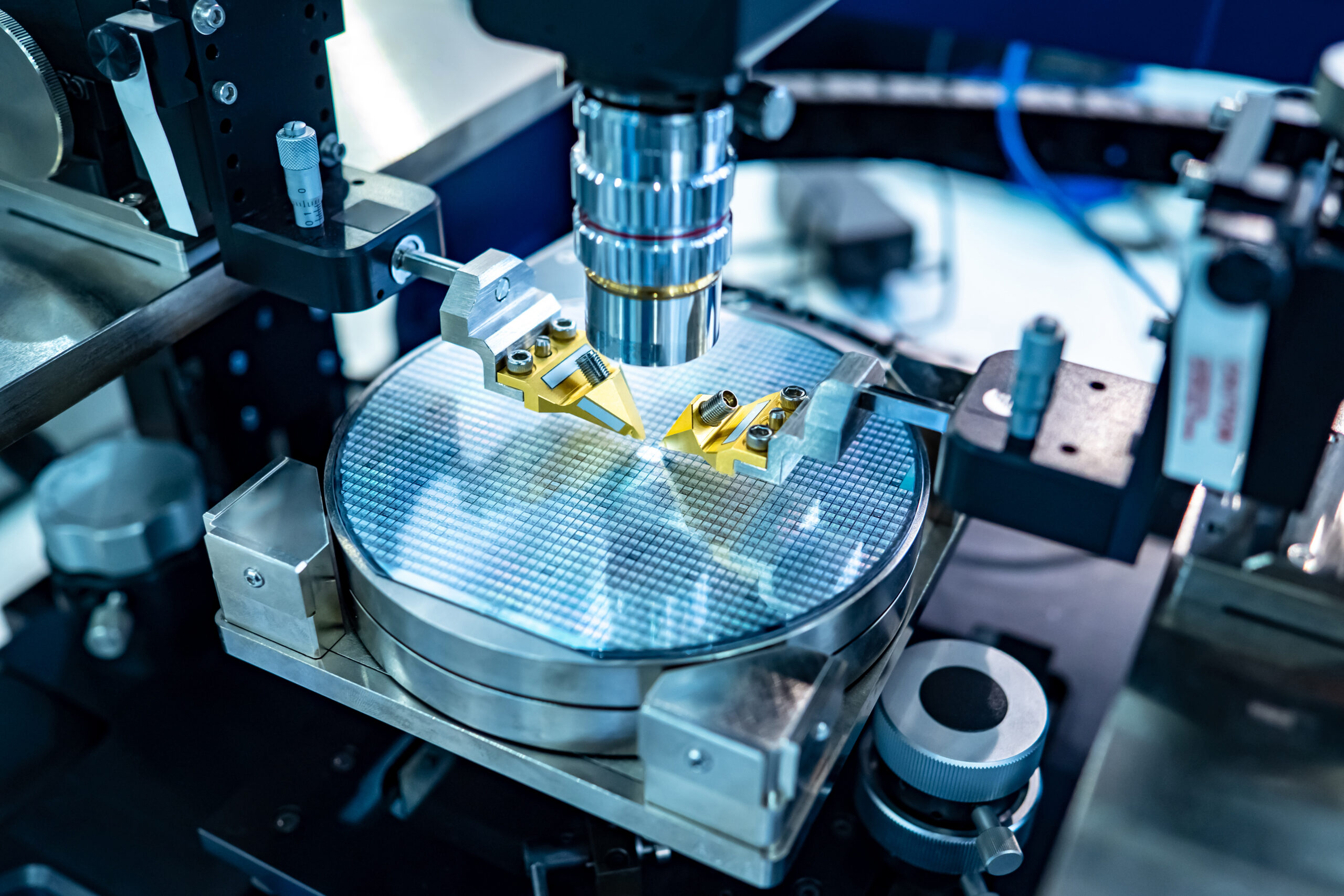
Semiconductor Manufacturing Magnetic Assemblies
In semiconductor manufacturing, precision is measured in nanometers. Every motion, transfer, and process must be tightly controlled to protect yield, throughput, and device performance. While chips themselves may be microscopic, the tools that build them rely on powerful, highly engineered magnetic assemblies working behind the scenes.
From wafer handling and motion control to vacuum processing and thin-film deposition, magnets form the backbone of semiconductor manufacturing equipment. High-performance semiconductor magnets enable the precision, cleanliness, and repeatability required to produce today’s most advanced devices.
Precision Motion at the Heart of Wafer Fabrication
Modern wafer fabrication tools demand smooth, repeatable motion with minimal vibration and zero contamination. Magnetic assemblies make this possible.
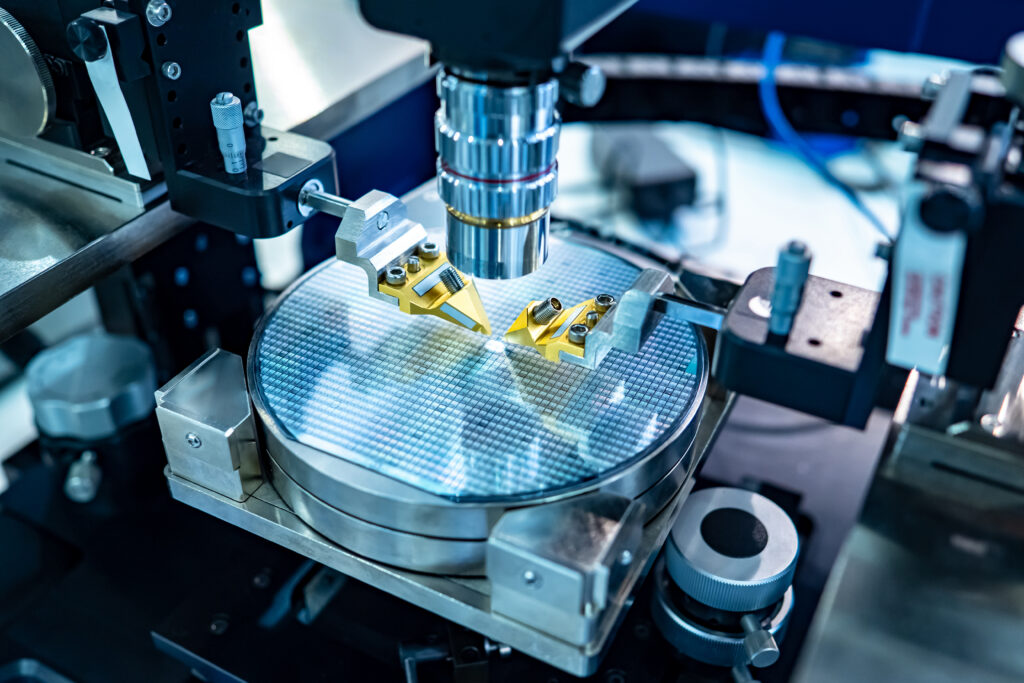
Linear motors drive wafer stages in lithography systems, delivering high acceleration and sub-micron positioning accuracy. Ironless flat motors provide smooth velocity control without cogging, ideal for inspection and metrology tools. Rotary motors and voice coil motors ensure precise positioning in robotic wafer handling systems.
Because magnetic motion systems can operate without physical contact between moving components, they reduce mechanical wear and particulate generation—critical advantages in cleanroom environments. For semiconductor equipment manufacturers, magnetic motion control means:
- Higher positioning accuracy
- Faster cycle times
- Reduced vibration
- Improved equipment uptime
In an industry where even minor instability can impact yield, precision magnetic motion systems are essential.
Wafer Handling & Automation Systems
Throughout chip production, wafers move between load locks, transfer chambers, and processing modules. These automated systems depend on magnets for reliability and repeatability.
Applications include:
- Robotic wafer transfer arms
- End effectors and alignment mechanisms
- Encoder magnets for high-resolution feedback
- Magnetic couplings for hermetically sealed transfer systems
Magnetic couplings are particularly valuable in vacuum environments, allowing torque transmission through sealed barriers. This protects sensitive chambers from contamination while maintaining precise motion control.
By minimizing friction and eliminating direct mechanical contact where possible, semiconductor magnetic assemblies help maintain the ultra-clean conditions required for advanced node manufacturing.
Vacuum & Plasma Processing Environments
Semiconductor manufacturing frequently takes place in vacuum or plasma environments, where magnetic performance must remain stable under thermal and chemical stress.
Magnetic assemblies play critical roles in:
- Sputtering magnetrons for thin-film deposition
- Electroplating magnets for grain alignment
- Annealing magnets for material processing
- Vacuum-compatible motors and actuators
In these applications, magnets must offer:
- Low outgassing materials
- Corrosion resistance
- Thermal stability
- Precision field control
Rare-earth magnets engineered for semiconductor tools provide high force density in compact footprints—supporting the increasing demand for smaller, faster, and more efficient equipment designs.
Cleanliness, Stability & Custom Engineering
Semiconductor equipment operates under some of the most stringent requirements in manufacturing. Magnetic assemblies must meet exacting standards for:
- Cleanroom compatibility
- Low particle generation
- ESD-sensitive environments
- Long-term magnetic stability
At Permag™, engineered magnetic solutions are optimized for performance within complex magnetic circuits. Material selection, coating design, and precision machining all contribute to assemblies that deliver consistent field strength, thermal stability, and mechanical reliability.
As wafer sizes evolve and device architectures become more advanced, motion systems must provide higher force output within tighter spatial constraints. Custom magnetic design ensures semiconductor OEMs can meet these challenges without compromising performance.
Enabling the Next Generation of Semiconductor Innovation
Magnets may not appear in the final chip, but they are fundamental to every stage of semiconductor manufacturing. Precision linear motors move lithography stages. Encoder magnets guide robotic wafer handling. Magnetrons control plasma deposition. Vacuum-compatible assemblies maintain process integrity.
Semiconductor innovation depends on more than microelectronics—it depends on the magnetic systems that power the tools building them.
As chip complexity increases and process tolerances tighten, high-performance semiconductor magnets will remain the quiet force driving precision, yield, and reliability across the industry.