



How Magnetic Assemblies Enable Lithography and Wafer Handling
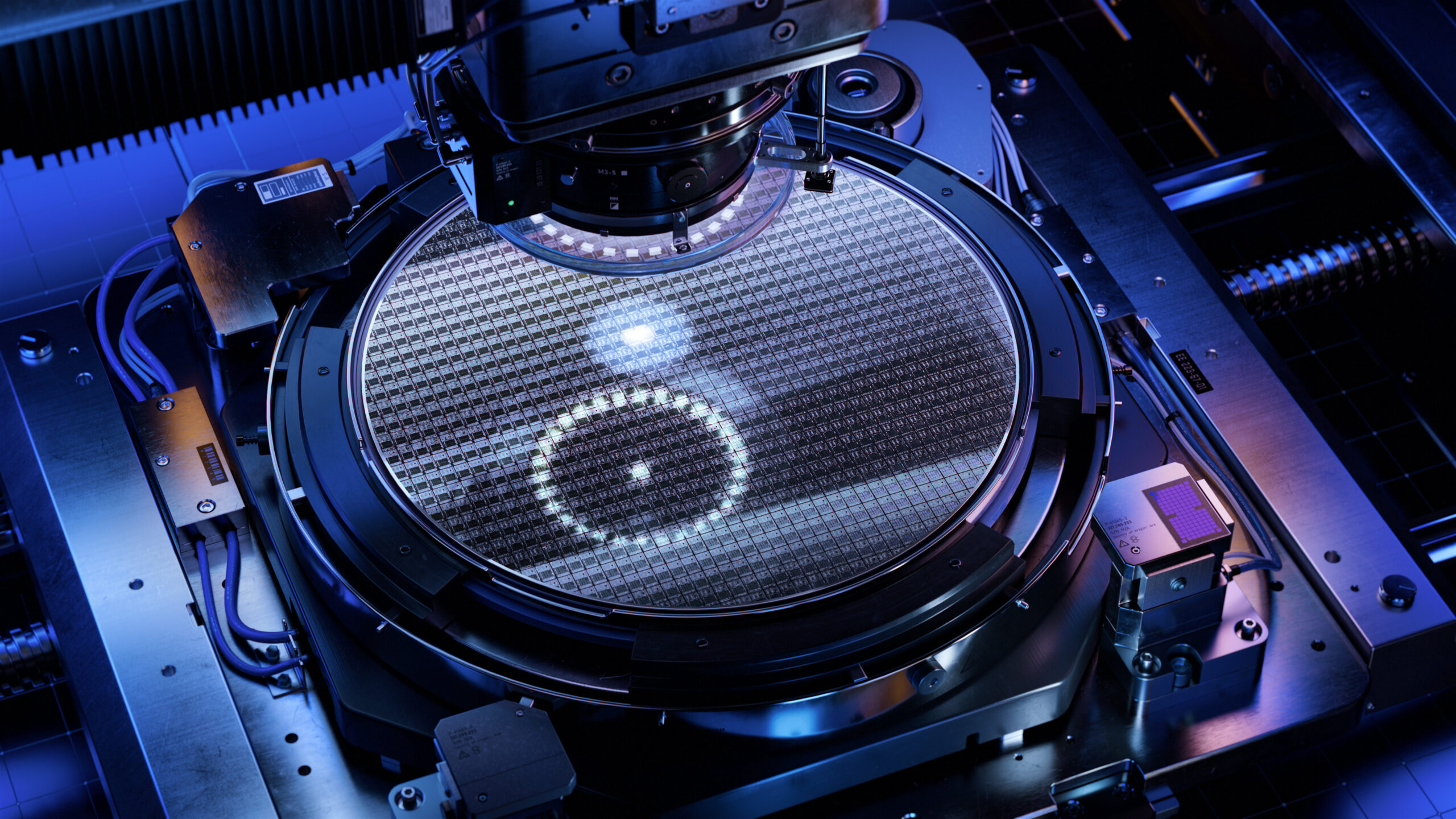
Precision in Motion: How Magnetic Assemblies Enable Lithography and Wafer Handling
Semiconductor manufacturing demands extraordinary precision. The smallest positioning error can affect device performance, reduce yield, and disrupt production efficiency. Modern chip fabrication requires motion systems capable of operating with nanometer level accuracy while maintaining reliability in high throughput manufacturing environments.
At the center of this precision are advanced magnetic assemblies. From lithography stages to wafer handling systems, engineered magnetic solutions provide the smooth, repeatable motion required to produce today’s most advanced semiconductor devices.
Linear motor arrays and precision magnetic components play a critical role in enabling the motion control systems used throughout semiconductor fabrication equipment.
Motion Control at the Core of Lithography
Lithography is one of the most critical processes in semiconductor manufacturing. During lithography, patterns are transferred onto silicon wafers using highly sophisticated optical systems. The wafer stage must move with extreme precision while maintaining perfect alignment with the projection optics.
This process requires motion systems capable of achieving:
- Nanometer scale positioning accuracy
- Smooth velocity control during scanning operations
- Rapid acceleration and deceleration
- Long term stability during continuous operation
Traditional mechanical drive systems struggle to meet these requirements due to friction, wear, and mechanical backlash. Direct drive magnetic motion systems eliminate many of these limitations and allow equipment designers to achieve the precision required for advanced semiconductor lithography.
Linear Motors for High Precision Motion
Linear motor technology has become a foundational component of semiconductor manufacturing equipment. Unlike conventional rotary motors with mechanical transmissions, linear motors generate motion directly through electromagnetic interaction between magnetic arrays and coil assemblies.
This direct drive architecture offers several advantages that are essential for semiconductor motion control.
Exceptional positioning accuracy
Direct drive motion eliminates mechanical backlash, enabling precise wafer stage positioning.
Smooth and stable motion profiles
Magnetic force generation allows for extremely smooth velocity control, which is critical during lithography scanning operations.
High acceleration capability
Strong magnetic fields combined with lightweight stage assemblies enable rapid acceleration and deceleration without sacrificing precision.
Reduced maintenance and contamination risk
Contactless operation minimizes mechanical wear and reduces particle generation, which is vital in semiconductor cleanroom environments.
These benefits make linear motor arrays an ideal solution for the motion platforms used in advanced lithography tools.
Precision Magnetics for Wafer Handling Systems
Beyond lithography stages, semiconductor fabs rely on highly automated wafer handling systems to move wafers between process steps. Robotic transfer arms, wafer loaders, and precision positioning mechanisms must operate with both speed and accuracy.
Magnetic assemblies support these systems by enabling compact motion solutions with high force density and excellent positional control.
Key advantages include:
- Reliable and repeatable motion for automated wafer transport
- Compact magnetic designs that fit within space constrained equipment
- Reduced mechanical wear for longer operational lifetimes
- Low particle generation that supports stringent cleanroom requirements
These characteristics are essential for maintaining throughput and reliability across complex semiconductor manufacturing lines.
Custom Magnetic Engineering for Semiconductor Equipment
Every semiconductor process tool presents unique design challenges. Equipment manufacturers must balance force output, spatial constraints, thermal stability, and magnetic field interactions within sophisticated tool architectures.
Custom magnetic assemblies allow engineers to optimize motion systems for specific application requirements. Advanced magnetic modeling techniques such as finite element analysis enable precise control of magnetic field distribution and force generation.
Material selection also plays a key role. High performance permanent magnets allow designers to achieve the force density required for high acceleration motion systems while maintaining compact designs.
By tailoring magnetic circuits to the needs of semiconductor equipment, engineers can achieve reliable precision motion that supports the demanding requirements of modern chip fabrication.
Enabling the Next Generation of Semiconductor Manufacturing
As semiconductor technology continues to evolve, fabrication equipment must deliver even greater levels of precision, speed, and reliability. Advanced lithography tools and automated wafer handling systems rely heavily on high performance motion platforms built around precision magnetic assemblies.
Linear motor arrays and engineered magnetic solutions enable the smooth, accurate motion that makes advanced semiconductor manufacturing possible. By combining magnetic materials expertise with precision engineering, manufacturers can continue pushing the limits of semiconductor device fabrication.
In an industry where nanometers matter, precision magnetics provide the motion control foundation that keeps semiconductor innovation moving forward.