



Why Cleanroom Compatibility Matters
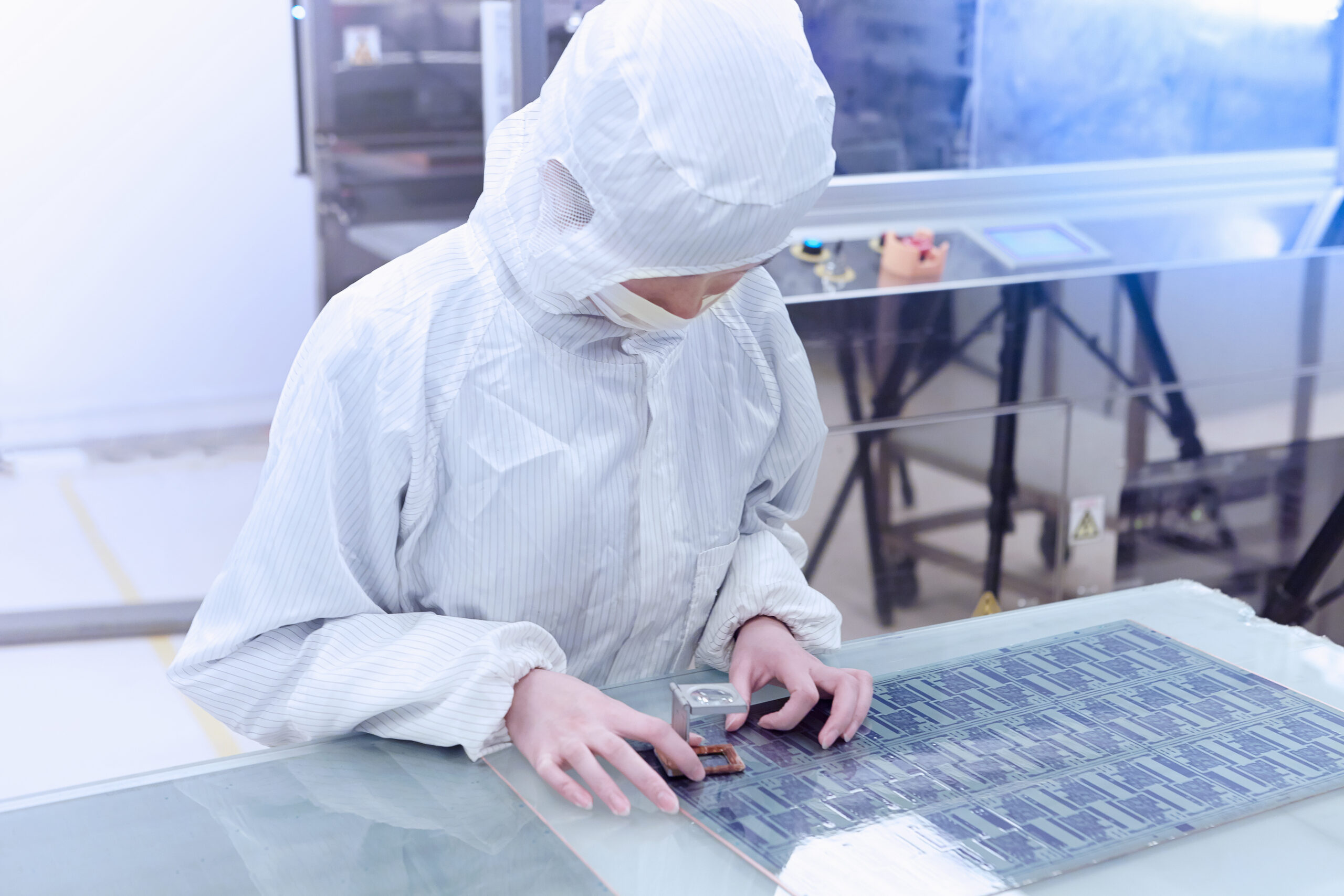
In semiconductor manufacturing, contamination is the enemy of yield. Advanced fabs operate in tightly controlled environments, where even submicron particles or trace outgassing can impact device performance and reliability.
Cleanroom-ready magnetics for semiconductor manufacturing must account for these realities across every stage of equipment design. Magnetic assemblies play critical roles across semiconductor equipment, from wafer handling systems to lithography stages and vacuum processes. Without careful engineering, these components can introduce contamination risks. Cleanroom-ready magnetics are not simply selected. They are designed, material-by-material and interface-by-interface, to meet ultra-low contamination requirements.
Understanding Contamination Risks in Magnetics
Contamination in magnetic assemblies typically stems from three primary sources: particulate generation, outgassing, and material degradation.
Mechanical wear or poor surface finishes can release particles into the environment. Adhesives and coatings may emit volatile compounds, particularly in vacuum conditions, leading to deposition on sensitive wafer surfaces. Materials exposed to thermal cycling, humidity, or reactive process gases can corrode or degrade over time, creating additional contamination risks.
These challenges become more significant in high-performance systems where magnets operate under motion, heat, and vacuum. This makes contamination control both a materials problem and a design problem.
Encapsulation: Isolating the Magnetic System
Encapsulation is one of the most effective strategies for reducing contamination. By enclosing the magnetic material within a sealed barrier, often a laser-welded stainless-steel housing, engineers can isolate the magnet from the surrounding environment.
This approach prevents particulate escape, protects against corrosion, and enables compatibility with aggressive process conditions such as plasma and vacuum environments. Encapsulation must be carefully engineered to account for thermal expansion, structural stresses, and any potential impact on magnetic field strength.
Sealing for Vacuum Integrity
 In semiconductor equipment such as PVD, etch, and deposition systems, sealing is equally critical. Leak paths can introduce contaminants or compromise vacuum performance.
Permanent sealing methods such as welding provide the highest level of integrity. Elastomer-based seals may be used where serviceability is required. In both cases, sealing strategies must account for leak rate requirements, thermal cycling, and chemical compatibility with process gases.
Well-designed sealing protects the magnetic assembly and contributes to long-term system reliability and uptime.
Advanced Coatings: The First Line of Defense
Coatings serve as the first barrier between magnetic materials and the operating environment. Standard nickel coatings provide baseline protection, but semiconductor applications often require more advanced solutions.
Polymer-based coatings and conformal layers such as parylene offer enhanced chemical resistance and low outgassing properties. These coatings must be applied with precision to ensure uniform coverage, strong adhesion, and resistance to cracking under thermal and mechanical stress.
Coating selection is a balance between environmental protection and maintaining magnetic performance.
Material Selection: Performance vs. Stability
Material choice plays a central role in cleanroom compatibility. Samarium Cobalt (SmCo) is often preferred in semiconductor environments due to its inherent corrosion resistance, thermal stability, and reduced reliance on protective coatings.
Neodymium Iron Boron (NdFeB) offers higher magnetic strength but typically requires more robust coating or encapsulation strategies to meet cleanliness standards.
Beyond the magnet itself, structural materials such as stainless steels and specialty alloys must also be selected for low particle generation and compatibility with cleanroom and vacuum conditions.
Validation: Designing for Real-World Conditions
Cleanroom-ready magnetics require rigorous validation before deployment. Particle testing, outgassing analysis, and environmental stress testing help ensure that assemblies meet strict semiconductor standards.
Successful designs are the result of close collaboration between materials experts, design engineers, and manufacturing teams. Iterative prototyping and testing reduce risk and improve performance before full-scale production.
Enabling Semiconductor Performance
From wafer handling robotics to precision motion systems and vacuum processing tools, cleanroom-compatible magnetics support the performance and reliability of semiconductor equipment.
By integrating encapsulation, sealing, coatings, and material selection into a unified design approach, engineers can reduce contamination risks while maintaining the precision and durability required in advanced fabs.