



What causes magnetism at the atomic level?
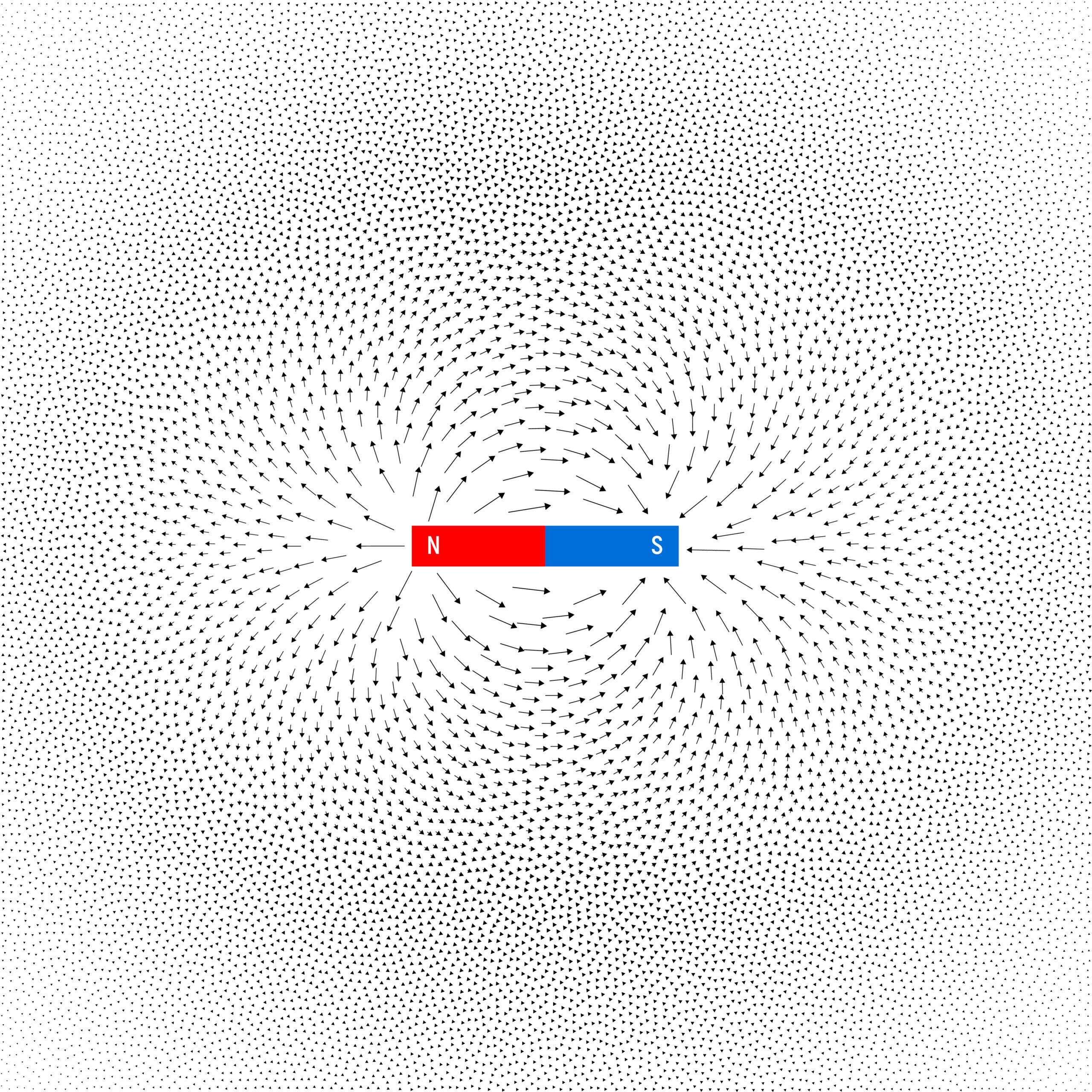
Magnetism is often explained through everyday examples, but the true answer to what causes magnetism lies at the atomic level. For engineers and designers, understanding how magnets work is essential for selecting materials that deliver consistent performance in demanding environments.
At its core, magnetism is created by moving electric charges. Within every atom, electrons orbit the nucleus, generating tiny electrical currents that produce magnetic fields. In addition, electrons possess a quantum mechanical property known as spin, which also contributes to magnetism. Together, these effects mean that every electron behaves like a microscopic magnet.
While all materials contain these atomic-scale magnetic effects, not all exhibit usable magnetism. This distinction is what defines magnetic materials and separates them from non-magnetic ones.
Why Only Certain Materials Are Magnetic
A key factor in what makes materials magnetic is how electrons are arranged.
In many materials, electrons exist in pairs with opposite spins. These pairs cancel each other’s magnetic fields, resulting in no net magnetism. In contrast, magnetic materials contain unpaired electrons, allowing individual magnetic moments to exist and contribute to overall magnetic behavior.
However, simply having magnetic moments is not enough. For a material to exhibit strong magnetism, those moments must also be aligned.
Magnetic Ordering, Temperature Effects, and Domain Structure
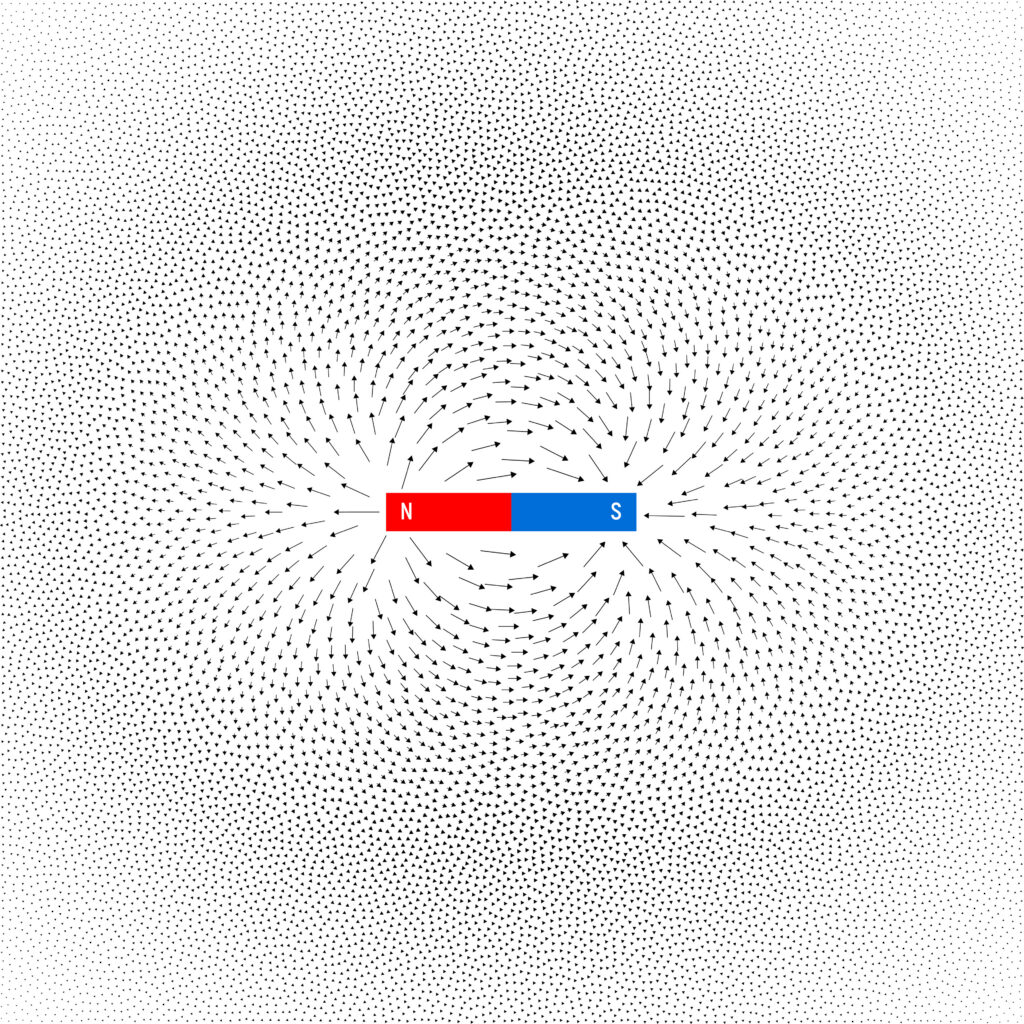
At typical operating temperatures, thermal energy disrupts alignment between magnetic moments. This causes them to point in random directions, preventing a strong magnetic field from forming.
As temperature decreases, materials can reach a transition temperature where magnetic moments begin to align. Materials with transition temperatures above room temperature are critical for real-world applications because they maintain stable magnetic performance under normal operating conditions.
In ferromagnetism, one of the most important forms of magnetism, atomic magnetic moments align in the same direction, reinforcing each other and producing a strong magnetic field. This behavior is what allows materials like iron and rare earth alloys to function as permanent magnets.
Even in ferromagnetic materials, alignment is not uniform across the entire structure. Instead, materials are divided into regions called magnetic domains. Within each domain, magnetic moments are aligned, but across domains, orientations differ. This causes the overall magnetic field to cancel out in an untreated material.
How Permanent Magnets Are Created
To create a permanent magnet, these magnetic domains must be aligned in a common direction.
This is achieved by applying a strong external magnetic field during the magnetization process. The field forces domains to reorient, creating a unified magnetic structure. Once aligned, many materials retain this configuration, resulting in a stable magnetic field even after the external field is removed.
This ability to retain magnetization is what defines a permanent magnet, and it is a critical factor in applications that require long-term reliability.
Engineering Impact: From Atomic Structure to Magnetic Performance
Material selection, temperature stability, and resistance to demagnetization all originate from how magnetic moments behave at the atomic level. High-performance magnets are engineered to maintain alignment under extreme conditions, ensuring consistent output in demanding environments.
These principles are critical across industries such as aerospace, defense, medical devices, and semiconductor manufacturing, where precision and reliability directly impact system performance.
Understanding how magnets work at this level enables the development of custom magnetic assemblies optimized for specific operating conditions and performance requirements.
Magnetism is not simply a material property. It is the result of atomic interactions that can be controlled and optimized through engineering.
By understanding what causes magnetism and how magnetic materials behave at the atomic level, engineers can design solutions that deliver superior performance, stability, and reliability.
From fundamental physics to advanced applications, magnetic performance begins at the atomic level.