



Magnetic Rotary and Linear Actuators in Drug Delivery Systems
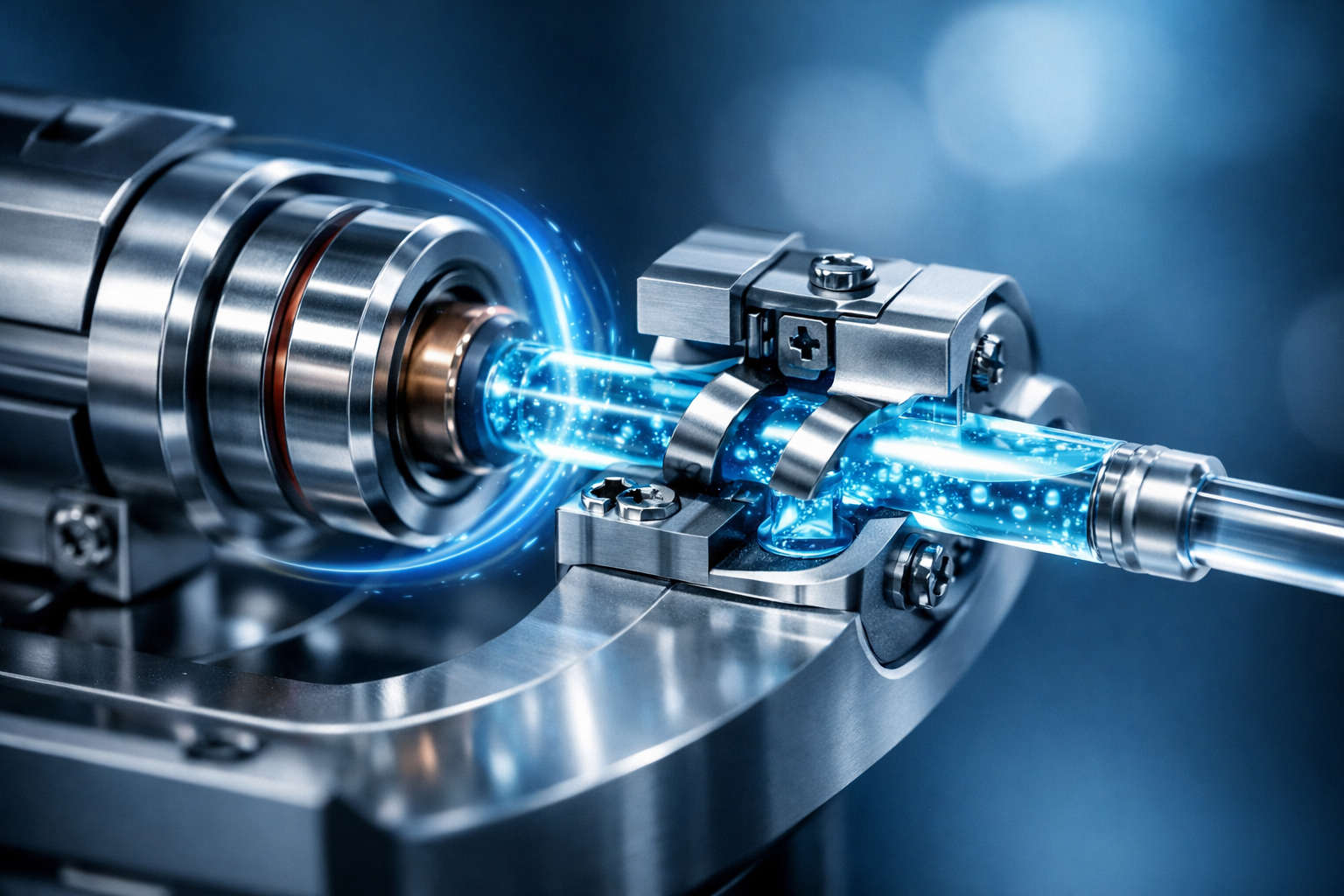
Magnetic Rotary and Linear Actuators in Drug Delivery Systems
Precision is essential in modern medical technology. This is especially true in cardiovascular and neurological therapies where automated drug delivery systems must administer medication at exact intervals and doses.
Devices such as implantable infusion pumps, insulin delivery systems, and targeted neuro drug delivery platforms depend on highly controlled motion systems to regulate fluid flow. Magnetic rotary and linear actuators provide the precision motion control needed to enable safe, reliable, and repeatable drug delivery.
As medical device manufacturers continue to develop smaller and more intelligent therapeutic systems, magnetic actuation technologies are playing an increasingly important role in enabling accurate dosing and long-term device reliability.
The Importance of Precision in Cardio and Neuro Drug Delivery
Many cardiovascular and neurological treatments require medication to be delivered in extremely small and carefully controlled quantities. Even minor deviations in dosing can impact therapeutic effectiveness or patient safety.
Drug delivery devices must therefore meet strict performance requirements. These include highly repeatable motion control, stable mechanical operation, low power consumption, and long service life. Implantable devices must function reliably for years without maintenance.
For therapies such as insulin regulation, intrathecal pain treatment, and targeted neurological drug infusion, the device must precisely regulate medication flow from a reservoir through a pump or valve system. This is where magnetic actuation systems provide a significant advantage.
How Magnetic Actuators Enable Controlled Motion
 Magnetic actuators convert magnetic energy into mechanical motion that can be precisely controlled. In drug delivery devices, this motion typically drives miniature pumps, valves, or dosing mechanisms.
Two common actuator configurations used in medical devices are rotary magnetic actuators and linear magnetic actuators.
Rotary magnetic actuators generate controlled rotational motion. This rotation can drive small pump mechanisms or gear systems that move medication from a reservoir through the delivery pathway. By carefully controlling rotational speed and position, the system can regulate medication flow with high precision.
Linear magnetic actuators generate straight line motion that can move plungers, pistons, or valve components. Linear motion is particularly useful for micro dosing systems where small positional changes directly correspond to specific medication volumes.
Both actuator types benefit from the inherent advantages of magnetic motion systems.
Because motion can be generated without direct mechanical contact between components, magnetic actuators often provide smoother operation and reduced mechanical wear.
Advantages of Magnetic Actuation in Medical Devices
Magnetic rotary and linear actuators offer several benefits that align well with the demanding requirements of medical device engineering.
Precise motion control is one of the most important advantages. Magnetic forces can be carefully controlled to produce accurate positioning and repeatable motion. This level of control is critical for maintaining consistent drug dosing over long treatment periods.
Miniaturization is another key benefit. Advanced magnetic materials allow engineers to design compact actuators that deliver significant force in small geometries. This supports the development of smaller implantable and wearable drug delivery devices.
Reliability is also essential. Magnetic systems reduce friction and mechanical wear, which helps extend device life. For implantable systems that must operate continuously inside the human body, long-term reliability is a critical design requirement.
Energy efficiency is another important factor. Magnetic actuators can be optimized for low power consumption, helping extend battery life in portable and implantable medical devices.
Magnetic Design Considerations for Drug Delivery Systems
Developing magnetic actuators for medical drug delivery systems requires careful engineering and design optimization. Engineers must consider factors such as magnetic material selection, actuator geometry, and overall system integration.
Temperature stability is particularly important since the device must operate consistently at body temperature. Material selection also plays a role in ensuring long-term magnetic performance and mechanical stability.
Biocompatibility is another key consideration. Components used in implantable systems must be compatible with the human body and may require specialized coatings or encapsulation.
Engineers must also manage stray magnetic fields to ensure that nearby sensors, electronics, or other medical systems are not affected by the actuator’s magnetic circuit.
Advanced modeling tools such as finite element analysis allow engineers to simulate magnetic performance and optimize actuator designs before manufacturing begins.
Enabling the Next Generation of Drug Delivery Technology
Medical technology continues to move toward more automated and personalized treatment systems. Smart drug delivery devices that incorporate sensors, feedback loops, and digital control algorithms are becoming increasingly common.
These advanced systems rely on highly precise motion control components to regulate medication delivery accurately and consistently.
Magnetic rotary actuators and linear magnetic actuators provide the foundation for these motion systems. Their ability to deliver precise, compact, and reliable actuation makes them ideal for next generation cardio and neuro drug delivery devices.
As medical device innovation continues to accelerate, magnetic actuation technologies will remain a key enabling solution for improving therapeutic precision and patient outcomes.