



Biocompatible Magnetic Components
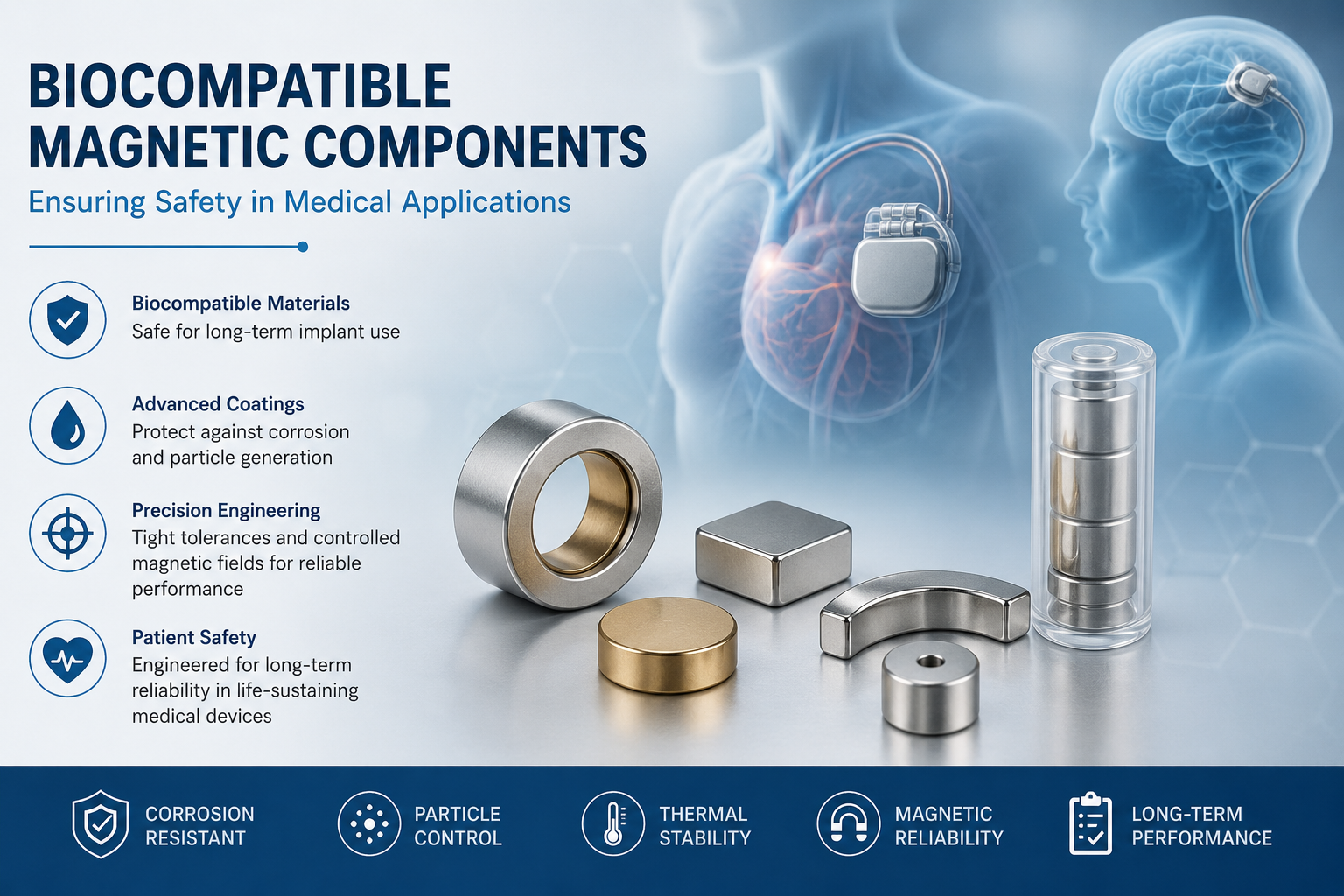
Biocompatible Magnetic Components – Ensuring Safety in Medical Applications
Medical technology continues to move toward smaller, smarter, and more capable implantable devices. From cardiac pumps and neurostimulation systems to minimally invasive surgical tools, magnets play a critical role in enabling precision motion, sensing, and power transmission inside highly sensitive medical environments.
For implantable and patient-facing applications, magnetic performance alone is not enough. These components must also meet strict biocompatibility and safety requirements to ensure reliable long-term operation inside the human body.
Why Biocompatibility Matters
Implantable medical devices operate in one of the most demanding environments possible. Exposure to moisture, bodily fluids, temperature changes, and continuous mechanical stress can degrade poorly protected magnetic materials over time.
Without proper engineering protections, magnets may experience: 
- Corrosion
- Particle generation
- Reduced magnetic strength
- Mechanical failure
- Device reliability issues
In life-sustaining medical systems, these risks are unacceptable. That is why material selection, coatings, sealing methods, and precision manufacturing processes are essential parts of magnetic component design.
Selecting the Right Magnetic Materials
Two of the most common materials used in advanced medical magnetic assemblies are samarium cobalt (SmCo) and neodymium iron boron (NdFeB). Each offers distinct advantages depending on the application.
SmCo magnets are valued for their excellent temperature stability and natural resistance to corrosion. These characteristics make them well suited for long-life implantable systems and harsh operating environments.
NdFeB magnets provide extremely high magnetic strength in compact sizes, making them ideal for miniaturized medical devices where space is limited. However, because NdFeB is more susceptible to corrosion, it typically requires advanced protective coatings or hermetic sealing for medical use.
Selecting the right magnetic material depends on several factors, including device size constraints, expected implant lifespan, operating temperatures, and environmental exposure.
The Critical Role of Coatings and Encapsulation
Protective coatings are one of the most important safeguards in medical magnetic systems. These coatings create a barrier between the magnet and the surrounding environment, helping preserve both safety and performance.
Common coating and protection methods include:
- Parylene coatings
- Titanium encapsulation
- Gold coatings
- Polymer and epoxy coatings
- Hermetically sealed assemblies
These protective layers help prevent corrosion, reduce contamination risks, and improve long-term device reliability.
In many cardio and neuro applications, even microscopic particle contamination can create serious complications. Proper encapsulation and sealing help ensure magnets remain stable throughout the life of the device.
Engineering for Reliability and Patient Safety
Biocompatibility extends beyond materials and coatings. Precision engineering and manufacturing processes also play a major role in ensuring device safety.
Medical magnetic assemblies often require extremely tight tolerances and carefully controlled magnetic fields to maintain consistent performance. Managing stray magnetic fields is particularly important in sensitive implantable systems where nearby electronic components must operate without interference.
Cleanroom-compatible manufacturing processes are also critical. Strict contamination control procedures help reduce the risk of introducing particles or defects during production and assembly.
To validate long-term performance, magnetic assemblies may undergo:
- Corrosion resistance testing
- Thermal cycling
- Magnetic stability verification
- Environmental stress testing
- Long-term reliability evaluations
These processes help ensure devices maintain consistent functionality over extended operational lifetimes.
Supporting the Future of Implantable Devices
As medical devices continue to evolve, the demand for smaller and more advanced magnetic systems will continue to grow. Cardio and neuro technologies increasingly rely on compact, high-performance magnetic assemblies that can operate safely for years inside the body.
Advanced materials, engineered coatings, and precision manufacturing all contribute to making these next-generation devices possible.
For medical OEMs, choosing the right magnetic partner is about more than magnetic strength alone. It requires expertise in biocompatibility, safety, reliability, and long-term performance in highly demanding clinical environments.