



Advancements in Magnetic Sensing for Medical Applications
Advancements in Magnetic Sensing for Medical Applications
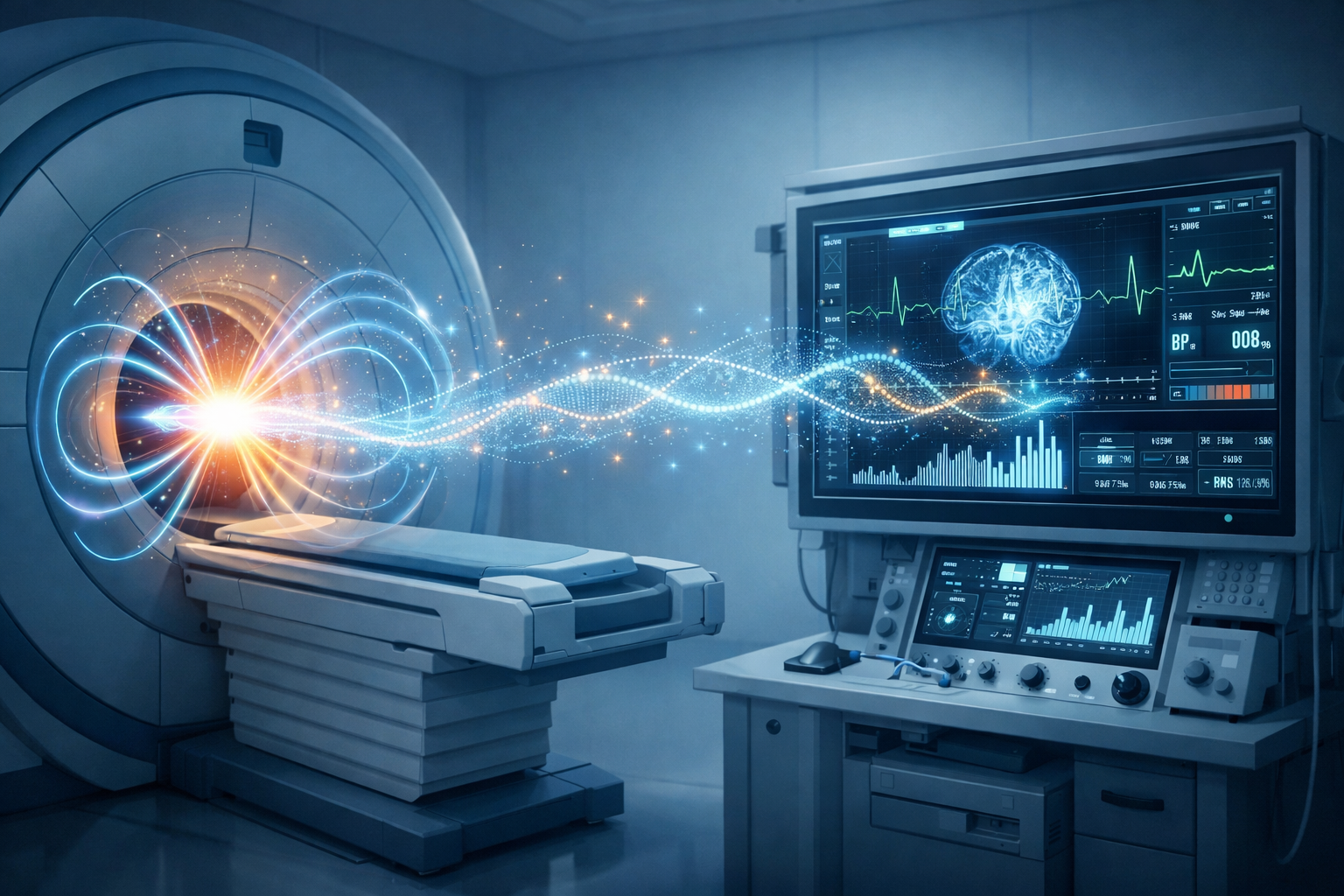
Modern clinical diagnostics depend on sensors that can deliver accurate, reliable measurements under demanding conditions. From automated laboratory analyzers to wearable monitoring devices, medical equipment must operate with high precision while maintaining strict cleanliness and reliability standards. Magnetic sensing technologies are playing an increasingly important role in enabling these capabilities.
By detecting changes in magnetic fields rather than relying on physical contact, magnetic sensors allow medical devices to measure motion, position, flow, and other parameters with exceptional accuracy. Recent advancements in sensor design, signal processing, and magnetic materials are expanding the role of magnetic sensing in diagnostic and monitoring systems across the healthcare industry.
The Role of Magnetic Sensors in Clinical Diagnostics
In many diagnostic environments, traditional mechanical sensing methods can introduce friction, wear, or contamination risks. Magnetic sensors provide a reliable alternative by operating without direct physical contact between components.
This non-contact approach offers several advantages for medical device designers. Magnetic sensors maintain consistent performance over long operating lifetimes because there is minimal mechanical degradation. They are also resistant to contamination from fluids or biological materials that may be present in clinical environments.
These characteristics make magnetic sensing particularly valuable in automated diagnostic platforms where precise motion control and system monitoring are essential.
Emerging Magnetic Sensor Technologies
Several magnetic sensor technologies are advancing the performance of modern medical devices.
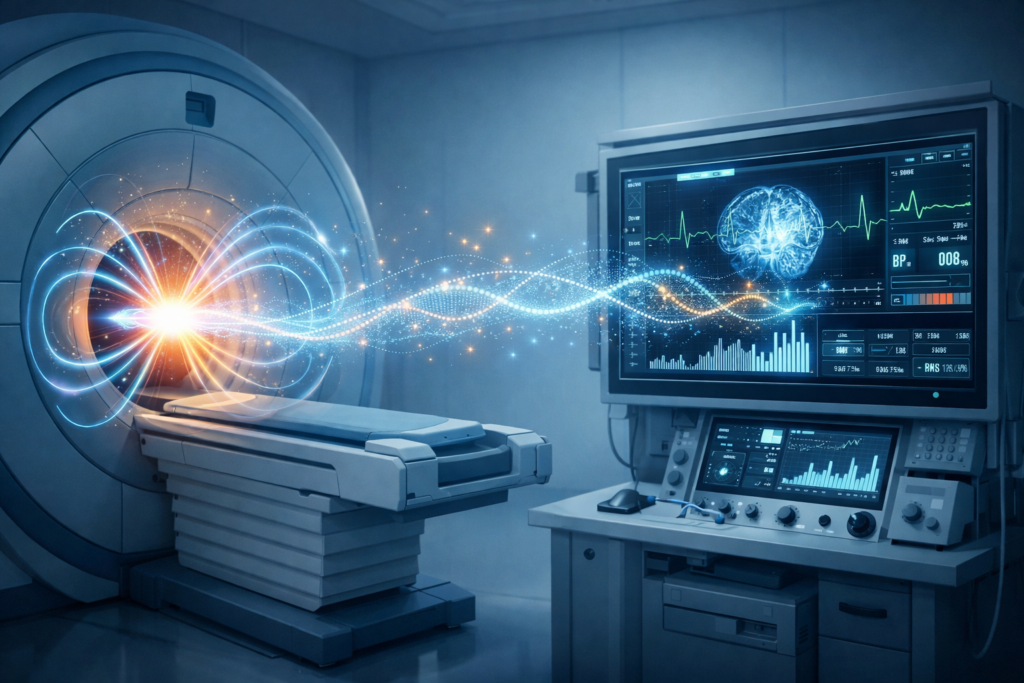
Hall effect sensors remain widely used for detecting position and rotational speed. These sensors produce a voltage output proportional to changes in magnetic fields, making them suitable for monitoring motors, actuators, and mechanical systems within diagnostic equipment.
Magnetoresistive sensors offer even greater sensitivity. By measuring changes in electrical resistance caused by magnetic fields, these sensors can detect smaller field variations and provide more precise measurements. Technologies such as anisotropic magnetoresistance and tunnel magnetoresistance enable extremely accurate detection in compact sensor packages.
These advancements allow diagnostic systems to respond more quickly and capture subtle signals that may be critical for accurate analysis and monitoring.
Applications Across Diagnostic and Monitoring Devices
Magnetic sensing technologies are integrated into a wide range of medical systems used in clinical laboratories and patient monitoring.
Automated diagnostic analyzers rely on magnetic sensors to track motor positions, robotic arms, and sample transport systems. Precise positioning ensures that reagents and samples are handled accurately during testing processes.
Magnetic bead-based assays, commonly used in molecular biology and immunoassay diagnostics, also benefit from magnetic sensing technologies. Magnetic beads are used to isolate biomolecules such as DNA, RNA, or proteins, and sensors help monitor and control the movement of these particles throughout the diagnostic workflow.
Magnetic sensors are also used to monitor fluid flow and pump performance within diagnostic instruments and infusion systems. In wearable medical devices, magnetic sensing can track motion, orientation, and mechanical activity to support patient monitoring applications.
Enabling Precision Through Magnetic Design
The effectiveness of a magnetic sensing system depends not only on the sensor itself but also on the surrounding magnetic design. Engineers must carefully optimize magnetic field strength, uniformity, and sensor placement to achieve reliable measurements.
Permanent magnet materials such as Neodymium Iron Boron (NdFeB) and Samarium Cobalt (SmCo) are commonly used to generate stable magnetic fields for sensing systems. These materials provide strong, consistent magnetic performance across a range of operating temperatures and environmental conditions.
Careful integration of magnets and sensors allows medical device designers to build compact, efficient systems that deliver accurate data without compromising reliability.
The Future of Magnetic Sensing in Healthcare
As healthcare technologies continue to evolve, the demand for highly responsive sensing systems will grow. Clinical diagnostics are becoming increasingly automated, and devices are shrinking in size while expanding in capability.
Magnetic sensing technologies support these trends by providing compact, precise, and durable measurement solutions. Advances in sensor sensitivity and magnetic materials will continue to enable faster diagnostics, improved monitoring systems, and more sophisticated medical devices.
By combining advanced sensor technologies with carefully engineered magnetic assemblies, medical device manufacturers can achieve the accuracy and reliability required for next-generation clinical diagnostic platforms.